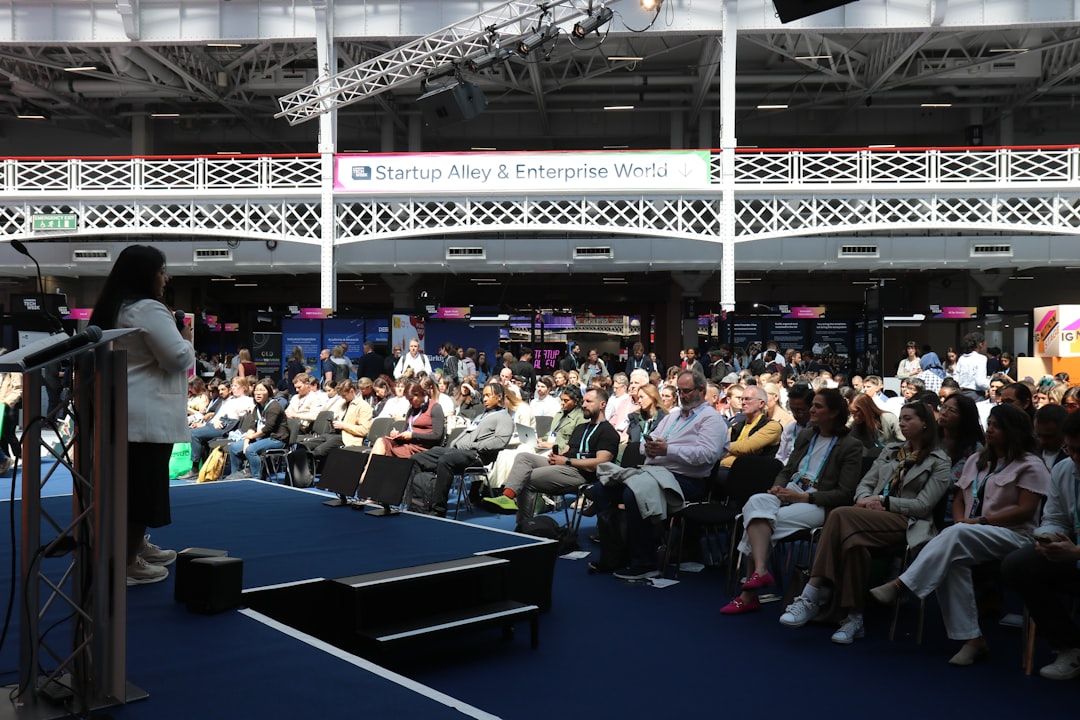
London’s autumn accelerator window opens every September, and the founders who treat it seriously arrive at Q4 with investor meetings already confirmed, cohort places secured, and a pitch refined by people who have built and funded companies in this city.
Why autumn is London’s most important funding season
London operates on a distinct investment rhythm. London is the UK’s largest startup hub and a key global destination for founders, investors, and operators. Its event calendar spans major conferences, specialist meetups, accelerator demo days, and investor networks designed for every stage of startup growth. September marks the moment when that calendar shifts into its highest gear.
Investors return from summer with fresh budgets and a desire to deploy capital before year-end. Many larger fundraising and networking events happen in London because of the concentration of capital and startup activity. Founders who are ready in September do not simply attend those events. They walk in with a prepared deck, a clear ask, and a warm introduction from a programme that lent them credibility.

The window is shorter than most founders expect. October is the most active month for pitch meetings. November brings term sheet conversations. By December, many lead investors have closed their allocation for the year. If you are not in the room by late October, you are waiting until March.
How to read the autumn accelerator calendar
A startup accelerator is a fixed-term programme designed to help early-stage businesses grow quickly. Programmes typically run for 3 to 6 months, providing hands-on support through early-stage funding, expert mentorship, access to investor networks, and business development guidance. In London, the most competitive programmes run 2 cohorts per year, with autumn being the second and often the more oversubscribed.
Key programmes with spring and autumn cohorts include Techstars London and Antler London, with Antler’s next residency starting in October. An accelerator is typically a fixed-term, cohort-based programme of 10 to 14 weeks, putting a group of startups through structured mentoring, workshops, and investor preparation, ending in a demo day where founders pitch to a room of funds and angels.
Apply to more than 1 programme in parallel. Map out deadlines 3 to 4 months ahead. Some programmes like Seedcamp recommend preparing materials 4 to 6 weeks before submission. If you begin in September, you are already late for some cohorts, but well-positioned for others that close in November for a January start.

The investor events that matter in Q4
Startup events in London attract companies across sectors including AI, fintech, healthtech, SaaS, and climate technology, alongside early-stage founders and later-stage scaleups. Not all of these events carry equal weight. A founder’s time in Q4 is limited, and every evening spent at the wrong event is one not spent preparing a follow-up to a warm lead.
London startup events are often used by founders to meet angel investors, venture capital firms, accelerators, and ecosystem partners. Prioritize events where investors attend to evaluate companies, not simply to network socially. Demo days, investor briefings, and sector-specific pitch evenings produce the clearest outcomes.






At a startup event, angel investors and pre-seed investors attend to meet new founders. Prepare a 60-second spoken summary of your company that leads with traction, not concept. Investors hear concepts every evening. They remember numbers.

Expert perspective on Q4 investor readiness
London’s Q4 investor cycle rewards preparation, not spontaneity. The founders who secure meetings in October are those who began building relationships in July. An autumn accelerator cohort accelerates this because it places you inside a credible network before you ask for capital. Investors at demo days are already pre-qualified. They came specifically to evaluate companies at your stage, which removes the first barrier entirely. The second barrier is differentiation. A refined pitch from a structured programme signals that your business has been stress-tested by people with pattern recognition. That signal matters more than founders realise, particularly at pre-seed and seed stage where the market is most crowded.
Industry perspective, venture capital and startup acceleration professionals in London
Government and non-dilutive funding: a parallel track
Equity from an accelerator or an angel investor is not the only capital available in Q4. Innovate UK Growth Catalyst is an integrated package of funding and support, designed to help accelerate high-potential startups on their journey to becoming scaleups and beyond. This programme has released multiple rounds, with significant grant allocations available to qualifying companies.
The Start Up Loans programme offers loans from £500 to £25,000. These carry no equity dilution, which makes them effective tools for extending runway while you close a larger round. Treating each non-dilutive grant as hard proof sharpens your later equity story for private investors.
UK startups pulled in roughly $17 billion in capital in 2025, the strongest year since 2022, and close to a third of all European venture funding. That aggregate number includes both private and government-backed sources. Smart founders use both in combination, not in sequence.


Build your Q4 action plan now
The autumn accelerator season is the sharpest and most structured funding window London offers each year. Founders who enter it with a clear plan secure meetings, cohort places, and capital. Those who enter it without preparation spend Q4 watching other companies close rounds they could have won.
Start by mapping your autumn accelerator targets and application deadlines this week. Then identify 3 to 5 investor events in October and November where your sector has a visible presence. Combine those with a parallel application for non-dilutive government funding to extend your runway. London rewards founders who treat the autumn accelerator calendar as a professional discipline, not a loose set of options. Act now, and Q4 becomes your strongest quarter.