
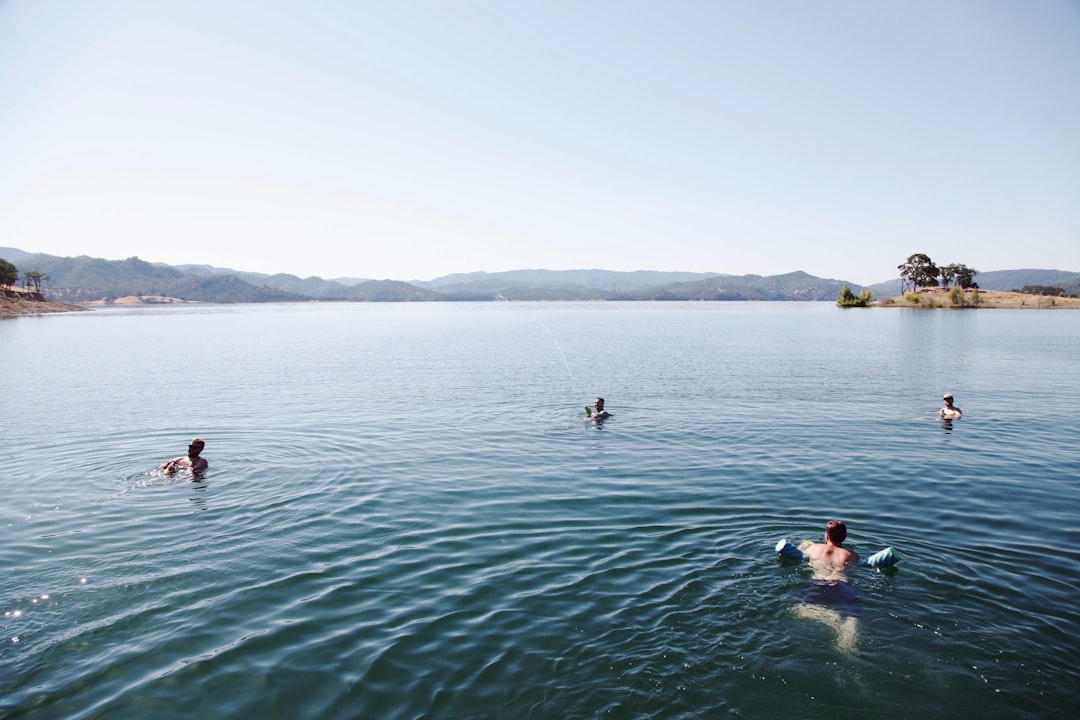
Open water swimming in London holds a quiet magic that most people only discover when the summer crowds thin and the water begins to cool.
Why now is the best time to join a club
Most people assume the outdoor season ends in September. The outdoor swimming season in the UK used to feel very clear. May to September was the time to swim in open water. But that thinking is changing fast. As the trend for year-round outdoor swimming has grown, all the seasons are becoming a blur.
Joining a club at the end of summer is actually a smart move. You avoid the busiest sign-up periods. You also get time to learn the ropes, find your wetsuit size, and meet regular swimmers before the water turns truly cold. The community is smaller and more welcoming at this time of year.
A club also gives you structure. Without one, many new swimmers simply stop when the weather shifts. With one, you have planned sessions, safety guidance, and people who will meet you at the water’s edge every week.

How to search for a club in London
The clearest starting point is Swim England. You can find your nearest open water club in England using Swim England’s venue look-up tool. Open water clubs are a fantastic way to get involved with sport, whether you want to improve, swim with like-minded people, or compete.
Those wishing to get into competitive open water swimming in London and to compete in regional, county, or national competitions will need to be a member of an affiliated club that caters for open water swimming as part of its programme. Swim England London covers all 32 London boroughs, so there is likely a club close to you.
British Triathlon also keeps a useful list. Clubs with open water swimming sessions are listed there, alongside venues that offer open water swimming. This list is especially useful for swimmers who also train for triathlons or want to cross-train with a broader fitness community.
Open water swimming venues that clubs use in London
Knowing the venues helps you match a club to your location. Hampstead Heath’s 3 ponds, the Men’s, Women’s, and Mixed ponds, are open all year round and are among the most popular swimming spots in the city. Many clubs organise informal sessions here, especially in the cooler months.

Woodberry Wetlands offers open water swimming in a working Victorian reservoir covering 23 acres, with marked loops from 100 to 300 metres and lifeguards throughout. It stays open all year and takes swimmers whatever the temperature, though wetsuits are strongly advised below 14 degrees and tow floats are compulsory.
In summer, some clubs run sessions at London Fields Lido and at the West Reservoir. As these venues shift their programmes in autumn, clubs that use them often move their members to indoor pools for mid-week training, keeping everyone active and connected.
Open water swimming: an expert perspective
Open water swimming clubs serve a purpose that goes far beyond fitness. When a new swimmer arrives at the edge of a reservoir in October, not quite sure what they have signed up for, the club is the thing that keeps them coming back. Safety is the first reason. Nobody should swim in cold open water alone, and a club provides lifeguard-supervised sessions, buddy systems, and coaches who understand cold-water acclimatisation. But the second reason is equally important: belonging. London can feel isolating, and finding a group of people who meet at dawn beside a lake, who cheer each other through difficult swims and warm up together afterwards, creates a bond that is genuinely hard to find elsewhere. We encourage new members to come at the end of the summer season rather than at the peak, because that is when they get the most attention and the most honest picture of what the club is really like.
Industry perspective, open water swimming and aquatic sports community in London
What to look for when open water swimming clubs compare
Not all clubs suit all swimmers. Some focus on competition, others on social swimming, and others on cold-water distance swims. Before you commit to membership, ask the club 3 questions. First, do they have sessions in autumn and winter? Second, what safety standards do they follow? Third, is a wetsuit required from day one?
Swimmers at development sessions must be aged 11 or over and able to demonstrate the ability to swim a minimum of 800 metres. Swimmers must have a wetsuit, as the majority of training is delivered as a practical session in the water. Most adult clubs have similar baseline requirements, so check before you arrive.
Inclusive clubs also exist across the city. Out to Swim was founded in 1992 by a small group of swimmers from the LGBTQ+ community. Most members are LGBTQ+, but the club welcomes all allied adults with an interest in aquatic sport, including those with disabilities. Out to Swim also welcomes complete open water beginners as well as more experienced swimmers, including long-distance competitors, triathletes, and English Channel swimmers.


How to extend your season safely with a club
Cold water requires gradual preparation. Swimmers should start in autumn to gradually build tolerance, check water temperature before each swim, and always warm up properly afterwards. A good club will teach you all of this before the water drops below 15 degrees.






With water temperatures dropping as low as 2 degrees Celsius in London’s ponds, swimmers are embracing the mental and physical benefits of cold-water immersion. A wetsuit extends the comfortable swimming season by several weeks. Tow floats improve your visibility to other water users and add a small layer of safety if you need to rest.
The key is consistency. Swimmers who attend club sessions regularly through autumn adapt far better to winter water. Those who stop in September and return in spring often feel like beginners again. A club removes that disruption and keeps your body and your confidence in the water.
Finding your open water swimming club this season
Open water swimming in London is not a summer hobby. It is a year-round practice, and the community that surrounds it is one of the most welcoming you will find in this city. Joining a club now, as the season shifts, gives you time to learn, to build cold-water confidence, and to arrive at spring already part of something. Search Swim England’s club finder, visit a session as a guest first, bring a wetsuit, and ask questions. Open water swimming will reward every step of curiosity you bring to the water’s edge.