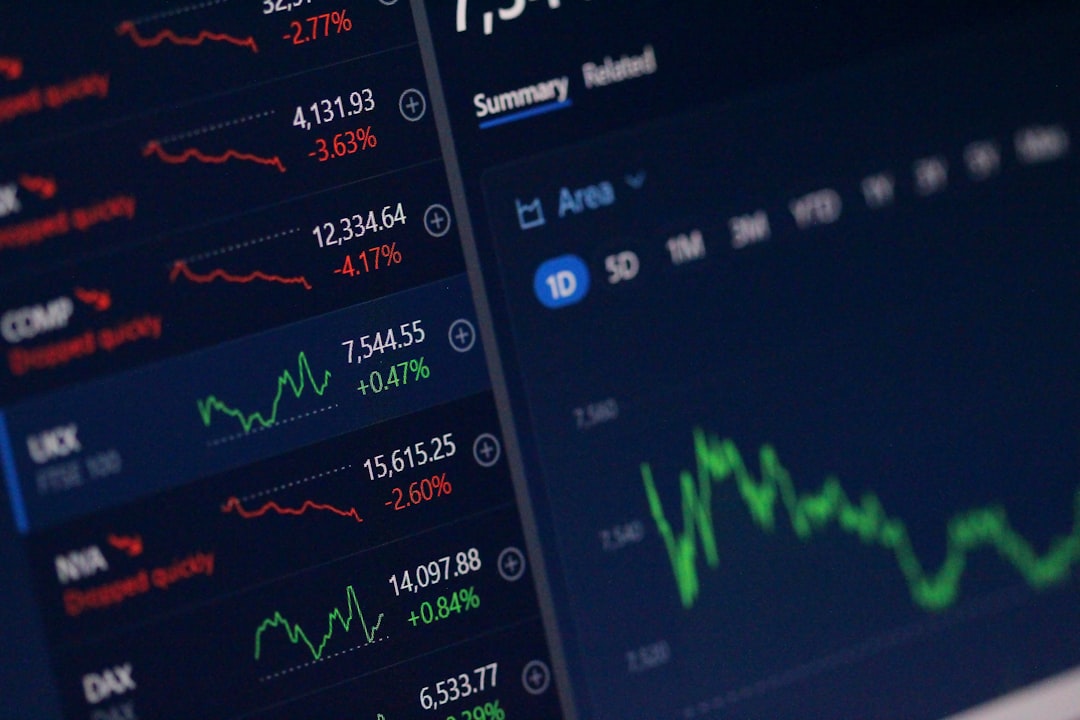
London’s flagship share index retreated on Monday morning as a renewed flare-up of violence in the Middle East pushed oil prices sharply higher, rattling investor confidence across European markets. The prospect of fresh signals on interest rates from the world’s top central bankers, gathering this week in Portugal, adds another layer of pressure for traders already navigating an uneasy geopolitical backdrop.
Oil climbs on Middle East disruption
London’s blue-chip index fell in early trading after fresh attacks in the Middle East renewed concerns over global energy supplies and inflation, with Brent crude climbing toward $72 a barrel, supported by continuing disruption around the Strait of Hormuz, one of the world’s most strategically important shipping routes for oil exports. The Strait carries a substantial share of global crude flows, and any sustained interference with shipping there can quickly translate into wider price volatility across commodity markets. The rise in crude prices weighed on broader market sentiment, with investors assessing the potential impact of higher energy costs on inflation and global economic growth. Energy stocks offered some counterweight to the sell-off, as higher crude prices tend to boost revenues for the major oil producers listed on the index, but the net effect on the broader market remained negative through the early session.
Central bankers take centre stage in Sintra
The ECB Forum on Central Banking, themed “Shaping Europe’s future: innovation, growth and stability,” runs from 29 June to 1 July 2026 in Sintra, Portugal. The gathering commands intense market attention this year because the line-up of speakers includes some of the most influential policymakers in the world. ECB President Christine Lagarde is scheduled to deliver the opening remarks, followed by high-profile policy panels featuring Federal Reserve Chair Kevin Warsh and Bank of England Governor Andrew Bailey. Markets will be listening closely for any indication of when major central banks may resume cutting borrowing costs, after recent signs that inflation remains stubborn in several advanced economies. Markets currently expect at least one more 25-basis-point interest rate hike this year from the ECB, following its recent deposit rate increase to 2.25%, while Fed expectations stand at two 25-basis-point rate increases by December.
A cautious mood, but Wall Street eyes a rebound
According to London Loves Business, Susannah Streeter, Chief Investment Strategist at Wealth Club, said: “The Footsie is on the back foot at the start of the week as investors assess fresh skirmishes in the Middle East, with few catalysts around to spark more optimism.” Despite that caution in London, the picture across the Atlantic looks rather different. Wall Street is expected to recover some of last week’s losses, with futures pointing higher as investors look for buying opportunities following the recent market pullback. That divergence reflects a broader split between European markets, which remain more exposed to energy costs and geopolitical proximity to the Middle East, and US markets, where enthusiasm for technology stocks and artificial intelligence continues to provide a powerful offsetting force. Traders on both sides of the Atlantic, however, agree that central bank commentary from Sintra will be the dominant driver of direction later in the week.

Rate signals and geopolitical risks lock markets in a bind
The combination of geopolitical uncertainty and monetary policy expectations is likely to dominate trading this week, leaving markets highly sensitive to developments in both the Middle East and central bank commentary. New Fed Chair Kevin Warsh faces particular scrutiny at Sintra. The new Fed chief has said he plans to avoid discussing, as much as possible, any forward guidance on whether the policy interest rate should be raised or lowered on a particular timetable, keeping his own outlook largely out of public view. That deliberate ambiguity may frustrate traders hunting for clarity. Traders are hunting for clues to validate or challenge current money market pricing, and the speeches will be closely parsed ahead of key US non-farm payrolls data due later this week. Any hawkish undertone from Warsh, Lagarde or Bailey risks reinforcing the view that borrowing costs will stay higher for longer, a scenario that would put further downward pressure on equity valuations globally.
What this means for London investors
The combination of geopolitical uncertainty and monetary policy expectations is likely to dominate trading this week, and with oil prices once again moving higher and policymakers preparing to outline their latest thinking, investors face a period in which geopolitics and inflation remain firmly at the centre of financial markets. For London-listed companies, the stakes are particularly high. Higher energy costs feed directly into operating expenses across sectors ranging from manufacturing to retail, squeezing margins at a time when consumer demand already looks fragile. The Sintra forum runs until 1 July, meaning any surprise comments from Warsh, Lagarde or Bailey could spark sharp moves in sterling, gilt yields and the FTSE 100 before the week is out. Investors with exposure to London equities would be wise to watch the central bank messaging as closely as the barrel price.
Based on reporting by London Loves Business (londonlovesbusiness.com)