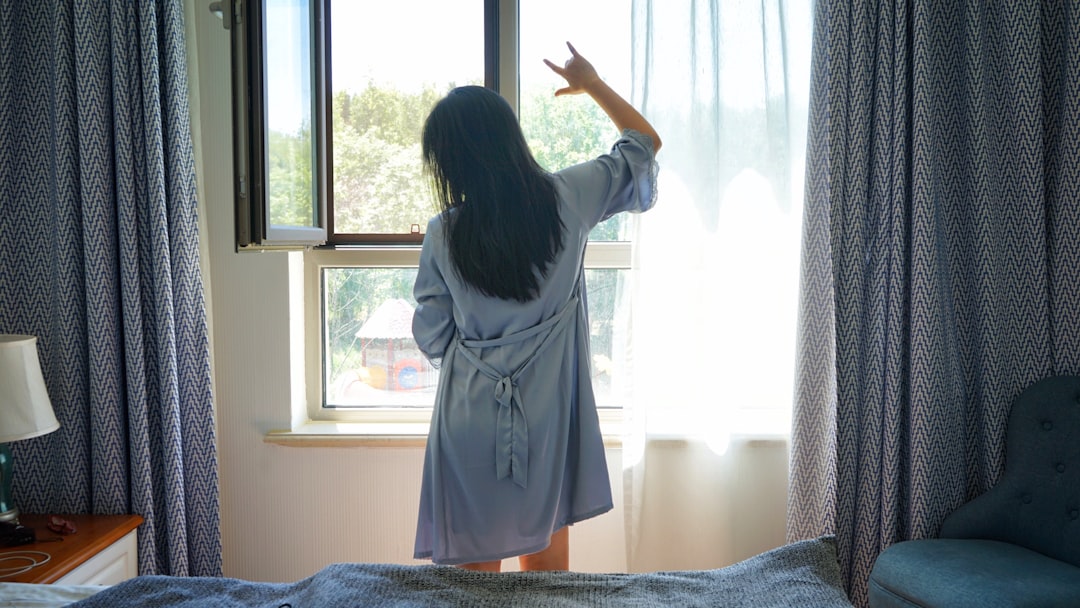
Sleep routine is one of the most underrated tools Londoners have, and late August, when golden light fills the city past 8 in the evening, is exactly when it matters most.
Why London’s late-summer light disrupts sleep
In August, London receives an average of 14 hours and 35 minutes of daylight per day. Sunset times shift from around 20:51 at the start of the month to 19:52 by the end. That is a lot of light entering your bedroom, your living room, and your eyes well into the evening. For anyone who loves this city, those long golden hours feel like a gift. For your body, they can be a problem.
Your brain suppresses melatonin whenever light enters the bedroom, even through closed eyelids. Melatonin is the hormone that signals to your body that it is time to sleep. When light delays that signal, your whole sleep routine shifts later, and you lose hours you cannot easily recover.
A study tracking over 4,000 participants confirmed that longer daylight hours directly reduce total sleep time. Late sunsets delay sleep onset and early sunrises cut sleep short, creating a seasonal sleep deficit. This is not a personal failing. It is a biological response that affects almost everyone living at London’s latitude.

How light and your internal clock interact
Circadian rhythms are intrinsic biological oscillations synchronized to the 24-hour day and night cycle, and they govern a wide range of physiological processes. These rhythms regulate sleep and wake cycles, hormone secretion, metabolic activity, and cognitive function. In simple terms, your body runs on a precise internal clock, and light is its primary control switch.
Research shows that light exposure during the day, particularly in the morning, is linked to improved sleep outcomes, including better sleep quality, faster sleep onset, and longer sleep duration. So the goal is not to avoid all light. It is to use light strategically and to protect yourself from it at the right times.
Research suggests that morning sunlight plays a crucial role in adjusting circadian rhythms. Early morning light exposure can help align the internal circadian clock, contributing to healthier sleep patterns. A short walk through your local park before 10 in the morning is therefore one of the most effective things you can do for your sleep routine.
Building a sleep routine that works for London life
The good news is that small, consistent changes produce real results. You do not need to overhaul your life or miss the city’s evening culture. You need a plan that takes London’s light seriously.

Try to keep regular sleep times. It is probably more important to have a fixed time for getting up in the morning than a fixed bedtime, to avoid going to bed when you are not sleepy. A consistent wake time anchors your circadian clock and makes falling asleep easier each evening.






From there, focus on your bedroom environment. Standard blackout curtains block light through the fabric but leave gaps at the top, sides, and bottom. These gaps can allow 10 to 30 lux of light into the room at sunrise. Invest in properly fitted blackout blinds. Your bedroom must signal darkness to your brain, even when the street outside is still bright.
Expert perspective on sleep and seasonal light
Managing sleep during the longer days of late summer is a genuine clinical challenge. The problem is not simply about feeling tired. Sustained disruption to circadian rhythms affects hormone balance, cognitive performance, mood, and long-term cardiovascular health. Patients often underestimate how much the evening light environment shapes their body’s readiness to sleep. Controlling that environment, through darkness, consistent timing, and reduced screen use in the 2 hours before bed, is the foundation of effective sleep medicine. Cognitive behavioural approaches that address sleep timing and light exposure consistently outperform medication as a long-term solution. Professionals in this field agree that seasonal awareness, understanding how your sleep needs shift with London’s light across the year, is a skill that pays off across every season.
Industry perspective, sleep medicine and well-being professionals in London
Practical steps to protect melatonin production
Melatonin does not rise on demand. You have to create the conditions for it. Begin dimming your home’s lights at least 90 minutes before your target bedtime. Use warm, low light in the evening rather than bright overhead lighting. Screens produce short-wavelength blue light that is particularly effective at blocking melatonin, so set all devices to a warm mode after 7 in the evening.
Avoid alcohol in the 4 hours before going to bed. Even though alcohol may make it easier to fall asleep, the effect wears off during the night, making it more difficult to stay asleep and resulting in disrupted sleep and early waking. This matters especially in summer, when a long evening pub visit can feel entirely reasonable but works directly against your circadian recovery.
Sleeping a lot during the day will affect your ability to fall asleep at night. If you do need a nap, try to limit it to 15 minutes. A short rest is fine. A long afternoon sleep, especially in the bright summer light, will push your bedtime even later.

Your sleep routine is a long-term investment
A consistent sleep routine is one of the few well-being habits that pays you back immediately and compounds over time. London’s late-summer light makes it harder to build, but it also makes the effort more worthwhile. Start with 3 changes: a fixed wake time, a dark bedroom, and a dimmed home in the evening.
When autumn arrives and the light shifts, your sleep routine will already be working for you. Your body will adapt faster because you built the habit during the hardest season. Take this seriously, because a strong sleep routine is not just about rest. It is about showing up fully for everything London has to offer, from the galleries to the gig venues, from Borough Market on a Saturday to a 6 am run along the Southbank.