
Sustainable living in London has always felt personal to me. I grew up between 2 cities on different continents, and London is the first place where I found both the ambition and the infrastructure to actually live by my values.
Why London takes green seriously
London is not simply talking about the environment. The city is acting on it. In 2022, Mayor Khan brought forward London’s net zero target to 2030, a bold step that placed the city among the most ambitious in the world. That deadline is not a distant idea. It shapes planning decisions, transport policy, and housing standards right now.
The London Climate and Sustainability Commission was established in 2002 to advise the Mayor of London on making London a sustainable world city. That long history matters. It means London’s green agenda is not a political trend. It is a deeply rooted institutional commitment. The Mayor’s Green Roots Fund, worth £12 million, supports green and blue space projects across London, giving communities active ways to make their neighbourhoods healthier, more nature-rich, and climate resilient.
For me, discovering these programmes changed how I walk through this city. I stopped seeing it as a concrete grid and started seeing it as a living system under active repair.

Sustainable living and the streets you walk
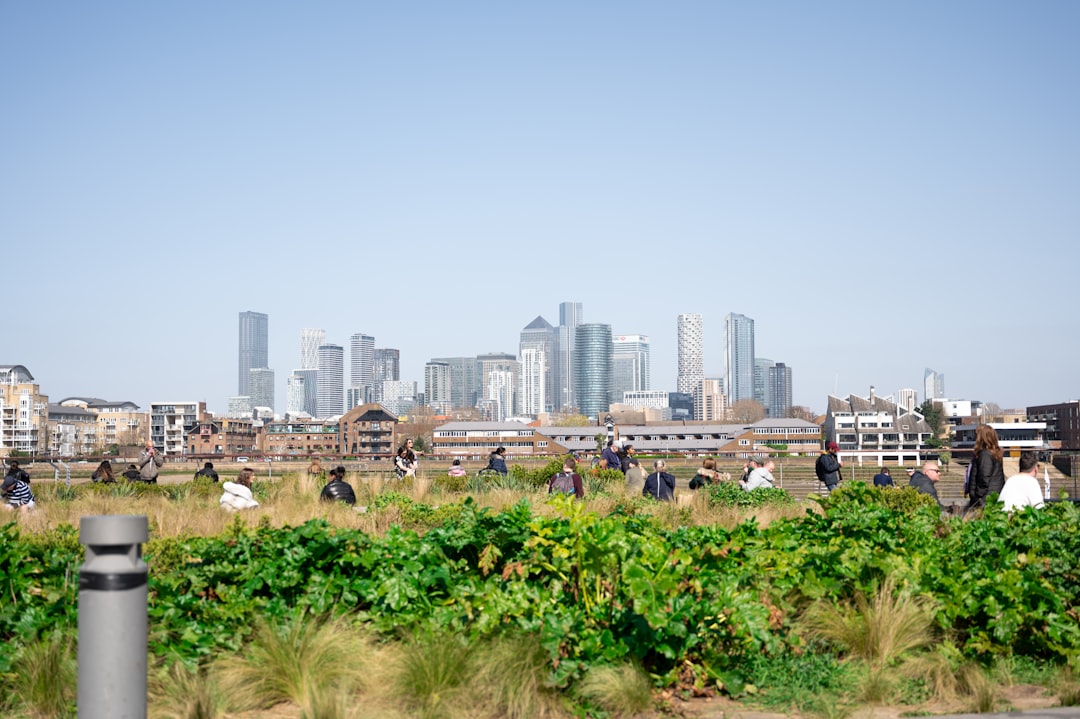
The streets themselves are part of the plan. The Mayor’s Transport Strategy promotes the concept of Healthy Streets, which means streets becoming better places to walk and cycle, reducing Londoners’ exposure to poor air quality. Urban greening is a core element of this strategy, helping to make streets part of a public realm network designed more for people than for vehicles.
Vehicle pollution has been drastically reduced by London’s Ultra Low Emission Zone (ULEZ), and initiatives like The Crystal, an all-electric sustainability hub, demonstrate what is achievable. These are not small pilots. They cover millions of residents and visitors every single day. Since 2016, the city has planted more than 400,000 trees in an effort to become a “National Park City.”
Transport is the daily ritual where sustainable living becomes real. I take the Overground or cycle on a Santander bike. Cycle superhighways and bike-sharing schemes like Santander Cycles, and public options like buses, trams, and trains, are practical tools that reduce your carbon footprint without sacrifice. Each small choice connects to the city’s bigger goals.
Sustainable living starts at home
Housing is where green policy gets personal. Sustainability is being woven into the fabric of London by transforming its infrastructure. From 2025, the Future Home Standard is ensuring that all new homes produce 75% to 80% less carbon emissions. That standard lifts the floor for every new build across the capital.

Over 60% of new build schemes launched in 2024 achieved a BREEAM “Very Good” or higher rating. Many developers now integrate solar panels, heat pumps, and smart thermostats to help reduce carbon footprints. Rooftop gardens, green walls, and rainwater harvesting are becoming standard features in 2025 projects.
London has consistently led on sustainability, with boroughs like Westminster and Hackney setting ambitious benchmarks that often exceed national standards. When I look at the green wall on a new building in Hackney or spot a rooftop garden near Elephant and Castle, I see that ambition made physical. Elephant and Castle’s £4 billion regeneration is transforming the district into a sustainability-focused urban hub, with over 3,000 low-carbon homes and extensive public spaces.

Expert perspective on sustainable living
London is in a remarkable position. No other city of this size combines an active net zero target, one of the world’s most used public transport networks, and a planning system that now requires developers to deliver measurable green outcomes. The circular economy alone, which already contributes billions to London’s overall economy, could nearly double in value by 2030 if current initiatives scale as planned. What is exciting is the quality-of-life case for sustainable living is now stronger than the guilt case. Residents who cycle, live in energy-efficient homes, and shop at local markets report better physical and mental wellbeing. That is the shift that will make London’s green transition stick.
Industry perspective, sustainability and urban development professionals in London






Sustainable living and the food you choose
Food is one of the quietest but most powerful levers of sustainable living. London’s food scene reflects this. The Skip Garden, a movable urban garden in King’s Cross, and the London Community Garden Network, which supports community gardens across the city, show how food production is becoming part of city life.
Farmers’ markets in Marylebone, Borough Market, and Brixton all offer local, seasonal produce. Shopping this way reduces supply-chain emissions and supports the local economy. London’s circular economy contributes £11 billion to the city’s overall economy and could grow to £24.2 billion by 2030, thanks to a number of key initiatives. Every purchase at a local market is a small part of that system.
For me, eating locally has become a spiritual practice as much as an environmental one. It connects me to the soil beneath this city and to the growers who tend it.

Sustainable living as a community act
Sustainability does not happen alone. Getting involved in community initiatives and volunteering for eco-friendly projects can make a significant impact. The London Sustainability Exchange is an organisation focused on promoting sustainability through community action and education. Thames21 is a charity dedicated to cleaning and maintaining London’s waterways.
The current moment is one of the best times to be part of a sustainability-focused community in London. The city’s thriving sustainability ecosystem offers real opportunities for collaboration and growth. Community is also where wellbeing enters the picture. Walking groups, repair cafes, community composting, and green volunteering all build social connection alongside environmental benefit.
I have met some of my closest London friends at a seed swap in Hackney and a river clean in Wandsworth. Green living brought us together. That is not a coincidence. It is the design.
Conclusion: sustainable living in London is here now
Sustainable living in London is no longer a niche choice. The London Environment Strategy includes policies that aim to ensure that more than half of London will be green by 2050, with tree canopy cover increasing by 10 per cent. The systems, policies, and communities that make sustainable living possible are already here. The task now is to engage with them. Take the bike lane. Visit the market. Join the community garden. Every action adds to a city that is choosing its future consciously. If you are ready to explore sustainable living in London more deeply, start with the links below and find the initiative closest to where you live.
Discover more about sustainable living
- London environment and climate change programmes (London City Hall)
- Planning a sustainable London: research and analysis (Knight Frank, 2025)
- London’s green future: learning from global sustainable living trends (London Post, 2025)
[End of deliverables]