BBC Proms tickets are easier to find than most visitors think, and a summer night inside the Royal Albert Hall is one of the most honest music experiences London offers.
What the Proms actually are
The annual Proms have welcomed many of the greatest orchestras, conductors, and soloists in classical music for more than a century, offering audiences an extraordinary opportunity to experience world-class performances in one of Britain’s most famous concert venues. That history matters. This is not a seasonal novelty. It is a living institution.
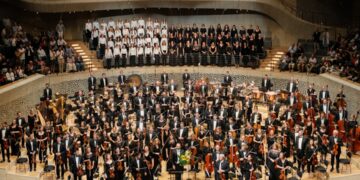
The 2026 season features 86 concerts, 72 at London’s Royal Albert Hall and 14 at venues elsewhere around the UK. The BBC Symphony Orchestra and Chorus, led by Dalia Stasevska, performs in the First Night of the Proms on 17 July alongside the BBC Singers, tenor Thomas Atkins, and pianist Yunchan Lim. The programme extends well beyond the classical canon.
The Proms has evolved over time to cater to an increasingly diverse audience, offering everything from Debussy to disco. Marin Alsop conducts an American Classics Prom featuring music by Bernstein, Gershwin, Copland, and more on 24 August, and a special Miles Davis Prom marks the centenary of the great jazz musician’s birth on 20 August. First-time visitors are often surprised by the range.

How to get Proms tickets at the last minute
Tickets for the Proms regularly sell out. However, that does not mean a last-minute visit is impossible. The Proms system includes a specific route for spontaneous attendees, and it costs very little.
Around 1,000 promming tickets are made available online for each performance on 9:30 am of the day of the concert. Day Promming tickets for the Arena and Gallery cost £8 each and are sold at the Royal Albert Hall box office at Door 12 on the morning of each concert. You can choose whichever method suits you, online or in person.
Queuing for Promming tickets is a tradition in itself. Regular Prommers arrive several hours before doors open for the most popular concerts. For an average weeknight programme, arriving 60 to 90 minutes before doors open is usually enough. Bring something to read and wear comfortable shoes.
Understanding the promming experience
“Promming” is the tradition of standing in the Arena (on the floor) or the Gallery (high above) to watch a concert. The Gallery offers spectacular views and you can stroll around a little, while the Arena tends to be more crowded but places you very close to the performers with a strong atmosphere.

The Proms ticket structure is one of the most accessible in British concert life. The Promming tradition has kept the Proms genuinely affordable since Henry Wood’s original vision. As a French person in London, I find this remarkable. In Paris or Berlin, standing this close to a world-class orchestra would cost far more.
There is no formal dress code for the majority of the Proms. You will see people in anything from jeans and t-shirts to full evening wear. Promming etiquette is welcoming. First-timers are entirely welcome in the Arena and Gallery. The atmosphere is enthusiastic and inclusive.
Expert perspective
The BBC Proms represents something genuinely rare in large-scale cultural events: a ticketing model that prioritises access over revenue. The £8 standing ticket is not a token gesture. It funds a real place in a world-class venue and produces a real audience relationship with the music. For visitors from continental Europe, particularly those used to expensive opera houses or exclusive festival structures, the Proms arena is a small revelation. The mix of seasoned regulars and curious newcomers creates an energy that seated concerts rarely achieve. Organisations that manage large music festivals worldwide consistently point to the Proms model as a benchmark for sustainable public engagement with classical programming.
Industry perspective, classical music programming and festival access professionals
What to do before and after the concert
The majority of Proms concerts take place at the flagship venue in South Kensington, the Royal Albert Hall. The surrounding area rewards early arrival. Hyde Park is a 5-minute walk north. Kensington Gardens connects directly and provides a quiet place to sit before the evening begins.
Most Proms take place in the evenings, with spectacular weekend options. In addition to the main concerts, the BBC Proms often hosts Proms Plus events, including talks, workshops, and discussions. Some of these events are free, while others require a separate ticket. Check the schedule to incorporate them into your visit.
You can bring a picnic into the venue, but alcohol may be confiscated. A meal on the grass in Kensington Gardens before the concert is a practical and pleasant alternative. Many Londoners treat the whole evening as a sequence: park, music, a quiet drink nearby after.

If you cannot get Proms tickets
Sometimes a concert sells out before you can act. This happens especially for headline nights and the Last Night of the Proms on 12 September. Do not stop there.
Every Proms concert at the Royal Albert Hall is broadcast live on BBC Radio 3 and available to stream on BBC Sounds. If a concert sells out, the broadcast is an excellent substitute. All Proms are broadcast on BBC Radio 3, many of them live. You can also catch up with every Prom on BBC Sounds and all televised Proms on BBC iPlayer.



For the Last Night specifically, there are 4 ways to acquire tickets: through the Five-Concert ballot, general sale, purchasing a whole season pass, or day promming. The Five-Concert ballot is open to those who have already bought tickets to at least 5 other concerts. Participants are entered into a ballot and can apply for up to 2 tickets.
Make the most of your Proms visit
BBC Proms tickets open a door to one of the most genuinely accessible cultural events in Europe. The programme in 2026 runs from 17 July to 12 September, and every single night offers a different programme. You do not need to be a classical music expert. You need £8, a willingness to stand, and 2 hours of curiosity.
Go and find your Proms tickets for a weeknight mid-season concert, choose the Arena for your first visit, and arrive early enough to feel the hall fill. That first moment when the orchestra tunes together and the audience settles into silence is something no broadcast quite captures. This is Léa’s advice: trust the queue, trust the standing section, and trust the Proms.