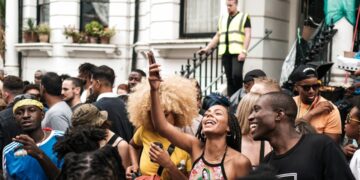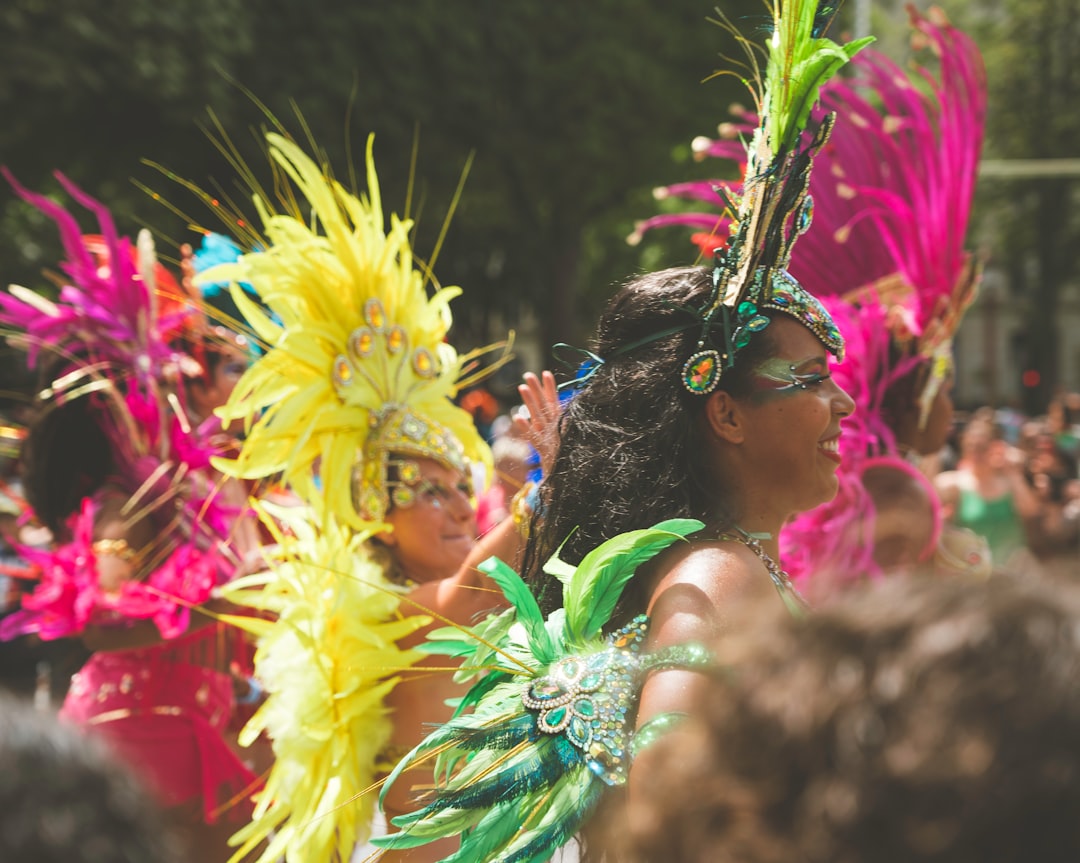
Notting Hill Carnival turns 60 this year, and while the costumes get more spectacular and the crowd gets bigger, the questions about who this festival truly belongs to have never been louder.
What Notting Hill Carnival actually is
From its origins as a children’s street party in 1966, the carnival has grown into Europe’s largest cultural event and the world’s second-largest carnival. That trajectory is remarkable. It is also a story about the Caribbean community in Britain claiming public space at a time when that space was actively being denied to them.
The carnival takes place on the streets of the Notting Hill area of Kensington and attracts around 2 million people annually, led by members of the British Caribbean community. This year marks the 60th anniversary of the 1966 street festival, backed by an extra £4.66 million from the Mayor of London after 2 years in which the event’s future looked genuinely uncertain. That funding fight is worth noting. A festival that generates enormous economic and cultural value for the city should not have to fight for its survival. The fact that it did tells you something important about which communities London chooses to invest in.
The full 2026 parade route
Notting Hill Carnival 2026 runs from Saturday 29 August to Monday 31 August. Panorama is Saturday, Children’s Day is Sunday, and Adults’ Day is Monday. The UK National Panorama Steel Band Competition runs from 4pm to midnight at Emslie Horniman’s Pleasance on Kensal Road.
Both parades follow the same route, starting at Westbourne Park station on Great Western Road, before traveling along Westbourne Park Road and Chepstow Road. From there, the parade moves onto Westbourne Grove, makes its way to Ladbroke Grove, takes in Kensal Road and Golborne Road, and finishes on Elkstone Road. The A402 Notting Hill Gate closes completely between Campden Hill Road and Kensington Church Street from 10am to 10pm on both Sunday and Monday, and many surrounding streets also close, including sections of Westbourne Grove, Great Western Road, and Chepstow Road.
At 3pm, a 72-second Moment of Reflection takes place in remembrance of the 72 people who lost their lives in the Grenfell Tower fire, as well as pioneers of the carnival community who have passed away. This is not a footnote. Grenfell sits within walking distance of the carnival route. The community that built this festival is the same community that the state failed in 2017. Standing still for 72 seconds costs nothing. Knowing why matters.
Sound systems: where to go and what to expect
Notting Hill Carnival’s 36 static sound systems play from 12pm to 7pm on both days, free of charge, on the same west London corners many of them have held for decades. These are not just speaker stacks. Sound systems at carnival are cultural preservation in action. These crews keep Caribbean music traditions alive while allowing them to evolve and integrate with UK culture.
The most legendary sound systems, including Channel One, Aba Shanti-I, Jah Shaka, and Rampage, have been fixtures of the carnival for years and attract dedicated followings who return to the same corner every year. King Tubby’s Hi-Fi, active since 1970, remains a veteran favorite, while Latin Rave Street Jam, the carnival’s first Latin rave from 1989, now features DJs playing Latin, Brazilian, and African beats. Linett Kamala, the carnival’s first female DJ, teams up with Trojan 7 to offer a mix of reggae revival, dubstep, global bass, and electronic music.

Mastermind Roadshow Sound System, a carnival presence since 1979, returns to its usual spot on Canal Way at the top of Ladbroke Grove, with a passion for hip hop, soul, and RnB, and a reputation for showcasing new talent across both days. The backstreets often contain the best discoveries. While the main road systems draw bigger crowds, the smaller setups on side streets offer more intimate experiences and sometimes better music.
Voices from the community
Notting Hill Carnival is not simply a party that happens to be run by Black British people. It is a direct expression of political survival. The communities that built this event did so in neighbourhoods where they faced housing discrimination, police violence, and active hostility from the state. Sound system culture was one of the few forms of power they could assemble without permission. When we talk about preserving carnival, we must talk about preserving the conditions that allow those communities to actually live here. Gentrification is the slow dismantling of what carnival celebrates. Every luxury flat that replaces a Caribbean household removes another thread from the fabric of this festival. The funding is welcome. The harder question is whether the city will protect the people, not just the spectacle.
Cultural and community perspective, Caribbean heritage organisations in west London




Best spots to watch the parade
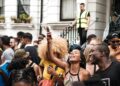
Watching the parade means holding a spot and letting carnival come to you: costumes, steel bands, mobile sounds on trucks, the full moving spectacle. The judging zone on Great Western Road is the place to see costumes at their most elaborate. Bands perform for the judges here, so the energy is concentrated and the presentation is at its highest level.
All Saints Road is legendary for its sound systems. This street has been a carnival hotspot for decades and usually hosts some of the most authentic reggae and dancehall. There are over 300 stalls at carnival this year, up from 250 last year, with options ranging from Jamaican jerk chicken to Trinidadian roti and Guyanese pepper pot. Position yourself at a junction near one of these stall clusters and you get food, music, and parade in one place.
Transport for London recommends Paddington as one of the easier approaches, followed by walking into the carnival area using the signed route. Stations including Ladbroke Grove, Notting Hill Gate, Westbourne Park, Holland Park, Queensway, and Royal Oak may face restrictions, so always check the latest TfL information before you travel.
Why Notting Hill Carnival still matters
Notting Hill Carnival does not need defending as an experience. More than 2 million people are set to arrive in west London to celebrate Caribbean culture at this 60th edition of the legendary carnival. That number speaks for itself.

What Notting Hill Carnival does need is honest acknowledgment. This is not a generic London street party. It is a specific act of cultural resistance that was built by a community that had very few other platforms. Every person who attends Notting Hill Carnival without understanding that history is enjoying a gift without reading the card it came with. Go, dance, eat, listen. And then ask yourself what you are doing the other 364 days of the year to support the communities that made this possible.